
Blog
GA4 Explorations Template Gallery – DreamHost
Jun
The time is nearly here: We’re just weeks away from when standard Universal Analytics will stop processing data and site admins may have to make the switch to Google Analytics 4. Lucky for all of us, making the switch to GA4 comes with a variety of advantages: improved cross-device and cross-platform tracking, higher privacy, more advanced machine learning capabilities, higher integration with Google Ads and other Google Marketing Platform products, and — most significantly — future proof analytics for all of your sites and properties.
While there could also be some challenges involved in migrating from Universal Analytics to GA4, the advantages make all of it price it. Google knows we could all use a hand in these early days, which is why they’ve provided some pre-built templates to enable you to create detailed analytics reports very quickly in any respect.
The GA4 Explorations Template Gallery is jam-packed with useful tools for marketers, data scientists, digital agencies, business owners, and even brand latest GA4 users. Able to dig deep into your analytics? Here’s the whole lot you might want to find out about Explorations and the Template Gallery.
What Are Explorations in GA4?
Previously called the “evaluation hub,” GA4 Explorations (or the “Explore” section) is a feature in Google Analytics 4 that permits users to create ad-hoc reports and analyze their data in a more flexible and intuitive way. It’s a strong tool for data exploration and may enable you to uncover insights not readily apparent in pre-built reports or dashboards.
How Do Explorations Work?
Listed below are the fundamentals for find out how to use Explorations in GA4:
- Accessing the Exploration feature: To begin using the Exploration feature, you might want to navigate to the “Exploration” tab within the GA4 interface. From there, you may select the info source (e.g., your website or app) and select the metrics and dimensions you should analyze.
- Constructing an Exploration: Once you may have chosen your data source and metrics, you may drag and drop dimensions into the “Explore” panel to construct your Exploration. You’ll be able to add multiple dimensions and metrics to your Exploration and rearrange them to create a custom report.
- Customizing your report: GA4 Explorations allow for a variety of customization. For instance, you may adjust the timeframe of the info, apply filters to your report, and create segments based on specific criteria. You too can visualize your data in a wide range of ways, similar to tables, line charts, and pie charts.
- Sharing and saving your Exploration: Once you may have built an Exploration, you may put it aside for future use or share it with other members of your team. You too can export your report as a CSV file or a Google Sheet.
Explorations also include an option that helps you save a ton of time: The Template Gallery. Here you could find Exploration report templates which you can arrange in only minutes — and with just just a few clicks.
Get Content Delivered Straight to Your Inbox
Subscribe to our blog and receive great content identical to this delivered straight to your inbox.
What Are GA4 Exploration Templates?
Exploration templates in GA4 are pre-built reports that allow users to quickly explore and analyze their data while not having to construct custom reports from scratch. These templates could be accessed from the “Exploration” tab within the GA4 interface and canopy a wide range of common business questions and metrics.
How Do You Access Exploration Templates?
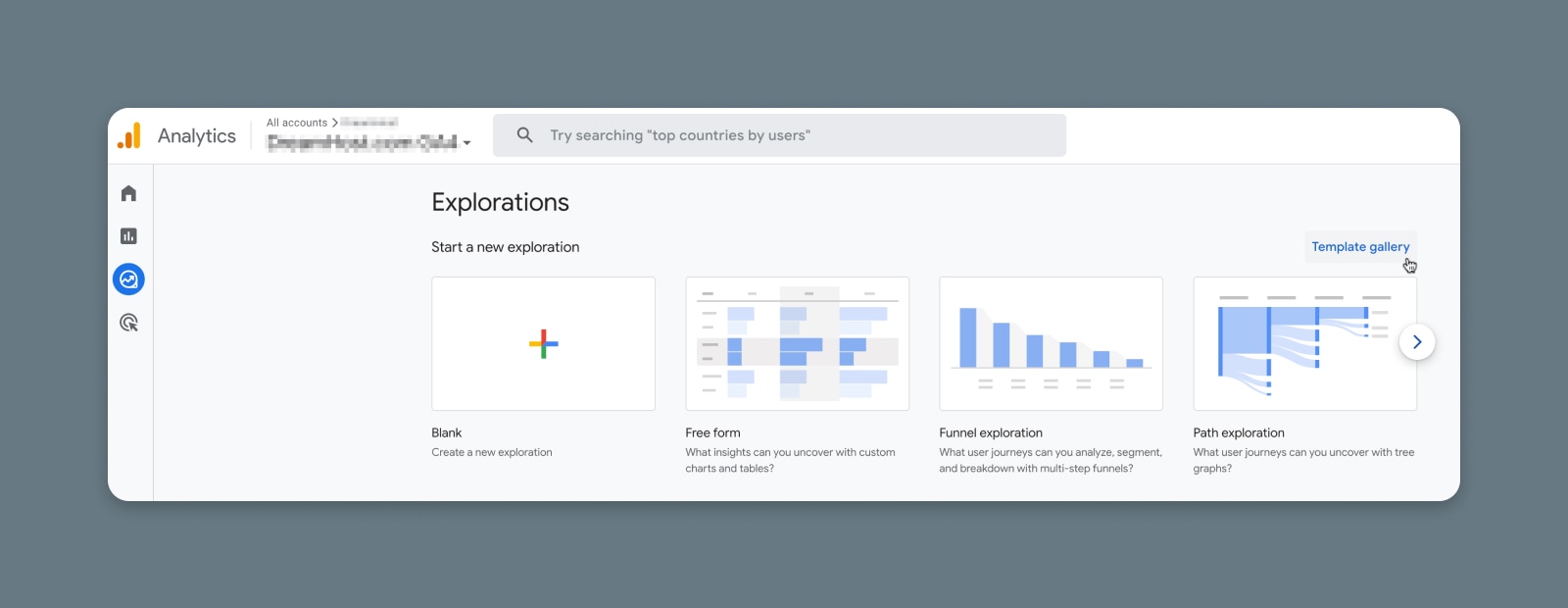
On the left-hand side of your GA4 homepage, click “Explore” within the menu. This takes you to a page with all of your exploration reports, including any templates or explorations you may have ongoing or have used previously.
On the right-hand side, near the highest of the page, you’ll see a link for the “Template gallery.” Click it to go to the important gallery page and browse available templates.
GA4 Explorations Templates (and The best way to Use Them)
The template gallery is currently divided into three sections: Techniques, use cases, and industries. Below, we’ll have a look at the pre-built templates which might be available in each section, with a temporary overview of how you should utilize every one.
Techniques
Blank

The primary option on the Template Gallery is to create a blank Exploration. This selection is for constructing your individual template from scratch- a really powerful tool — but not necessarily advisable for beginners.
The sky’s the limit for the reporting templates you may construct (and that could possibly be an entire blog post by itself). But since we’re specializing in using templates to save lots of time, we’re going to skip this one for now. Be at liberty to come back back to this selection when you’ve experimented with Explorations and are able to construct your individual custom report templates from scratch.
Free Form

Free Form could be very just like the Blank template option, but with more of a give attention to creating custom charts and tables. It means that you can create unique data visualizations by customizing your rows and columns. Just like the Blank template, this one is healthier used once you may have some GA4 Explorations experience under your belt.
Funnel Exploration

Funnel Exploration is one of the vital invaluable templates, and may enable you to discover vital insights about your customer journey. This template means that you can visualize and analyze the steps in a user journey, from initial acquisition to conversion. The Funnel Exploration template is designed to enable you to discover bottlenecks within the conversion process, understand all of the steps in your funnel, and, perhaps most significantly, see where persons are falling out of your required funnel.
This template supports as much as 10 steps in your funnel, which you’ll select in the primary tab. When you construct your funnel, you may then analyze each step in the method, using different segments, filters, and visualization options to get more granular insights.
Based in your evaluation, you may discover areas of the funnel where users are dropping off or experiencing friction, and take steps to optimize those steps. For instance, you might need to enhance the user experience on a specific page, or adjust your messaging or targeting to higher align with user needs.
Overall, the Funnel Exploration template within the GA4 Exploration Template Gallery is a strong tool for analyzing user behavior and optimizing your conversion process. By visualizing the steps in your funnel and identifying areas of opportunity, you may make data-driven decisions that enable you to improve your marketing ROI and drive business growth.
Path Exploration

The Path Exploration template is comparable to Funnel Exploration. It means that you can visualize and analyze the paths users take in your website or app. The Path Exploration template is designed to enable you to understand probably the most common user journeys and discover areas of opportunity for improving the user experience.
Once you may have chosen your starting event, you may drag and drop additional events or pageviews into the “Explore” panel to create the trail you should analyze. You’ll be able to add as much as 10 steps to your path, and may include any event or pageview in your data.
Once you may have built your path, you may analyze the performance of every step within the journey. The Path Exploration template provides a spread of visualization options, including tables, bar charts, and line charts, to enable you to understand how users are moving through the trail. You too can apply filters and segments to your report for more detailed insights.
This template helps you see users not through specific funnels, but through their organic behaviors. That leads to an entire latest set of insights you should utilize to optimize your site or app.
Segment Overlap

The Segment Overlap template means that you can compare the behavior of various user segments in your website or app. The Segment Overlap template is designed to enable you to understand how different segments interact along with your content and discover areas of opportunity for improving engagement and conversions.
On this template, after you choose the segments you should view, you may compare their behavior across a spread of metrics, like session duration, bounce rate, and conversion rate.
By comparing different segments, you may analyze the outcomes to discover areas of opportunity for improving engagement and conversions. The overlap and differences between segments can enable you to make data-driven decisions as you higher understand your audience.
User Explorer

The User Explorer template uses user data (based on the form of reporting identity you may have set in Google Analytics) to enable you to analyze the behavior of individual users in your website or app. The User Explorer template is designed to enable you to understand the journey that every user takes.
This template is great for taking a look at demographic data, or you may do a deep dive into behaviors for a person user (while still maintaining user anonymity), uncovering insights about patterns of their behaviors in your site. You’ll be able to analyze their behavior across a spread of metrics, including pageviews, events, and conversions.
Cohort Exploration
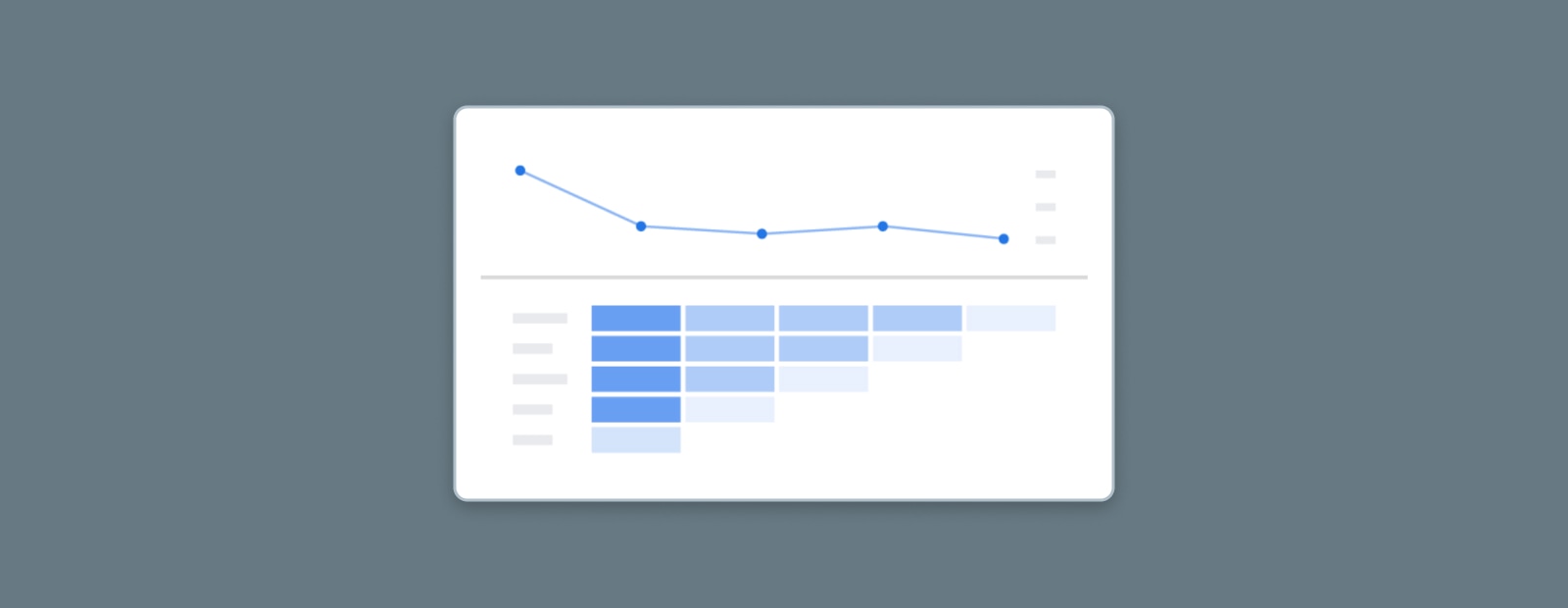
The Cohort Explorer template is a pre-built report that means that you can analyze the behavior of various user cohorts. A cohort is a gaggle of users who share a standard characteristic, qualities, or behaviors, similar to the month they first visited your website or app. That makes this template just like the User Explorer template, but less granular.
Some of the powerful features of this template is the way it means that you can follow one cohort over time. That is a terrific strategy to track how your marketing efforts and site optimization are performing; for instance, tracking a cohort that represents a certain target market can enable you to determine how well you’re reaching that focus on audience through your marketing efforts.
User Lifetime

The User Lifetime template can be just like the User Explorer template, only now you’re taking a look at individual users over their entire customer life cycle. That is a terrific strategy to analyze the lifetime value of your customers or users — the User Lifetime template is designed to enable you to understand the behavior of high-value users and discover areas of opportunity for increasing revenue and driving business growth.
It’s also invaluable for designing remarketing campaigns, identifying points where customers are likely to churn, and finding patterns in customers who don’t churn.
Use Cases
Acquisition

Everyone knows acquisition is one of the vital vital parts of site and app analytics, so GA4 features a template for it. The Acquisition template means that you can analyze how users are finding and interacting along with your website or app. The report focuses on the various channels and campaigns which might be driving traffic to your site or app, and the behavior of users who arrive through those channels.
Start by choosing a time range that you should examine. Then, you may analyze the traffic sources that drove users to your site or app during that point. The Acquisition template provides data on the performance of every channel, similar to organic search, social media, and paid promoting, in addition to the campaigns which might be driving traffic.
The template also means that you can analyze the behavior of users who arrive through each traffic source. You’ll be able to analyze metrics similar to bounce rate, session duration, and conversion rate to grasp how users are engaging along with your site or app.
Based in your evaluation, you may discover areas of opportunity for improving conversions. For instance, you might discover that users who arrive through organic search have the next conversion rate than users who arrive through paid promoting. You’ll be able to then take steps to optimize your paid promoting campaigns to higher goal high-value users.
Conversion

Before you should utilize the Conversion template, you might want to arrange some conversions. In GA4, you may mark any event as a conversion — For instance, making a purchase order, filling out a form, or subscribing to a newsletter. Just go to the Events page, create a brand new event or modify an existing one, and toggle the conversion switch.
The Conversion template then analyzes the performance of your website or app by way of conversions. It provides data on the variety of conversions, conversion rate, and revenue generated by each conversion. You too can analyze the performance of various conversion goals.
The Conversion template also means that you can analyze the behavior of users who convert in your site or app. You’ll be able to analyze user metrics like session duration, pages per session, and bounce rate to grasp how these users engage along with your site or app.
User Behavior

In the event you loved the landing page report in Universal Analytics, the User Behavior template is for you. It’s not the exact same because the landing page report, however it’s the closest to it within the pre-made templates, allowing you to follow specific users through the various stages of the user journey based on their landing page. You’ll be able to track them through acquisition, engagement, and retention — the report helps you visualize and understand how users are moving through these different stages.
The User Behavior template provides data on the variety of users at each stage of the journey, and you can too analyze the behavior of users at each stage, similar to the channels which might be driving acquisition, the content that’s driving engagement, and the features which might be driving retention.
Based in your evaluation, you may discover areas of opportunity for improving engagement and retention. For instance, you might discover that users who engage with certain varieties of content usually tend to develop into long-term users. You’ll be able to then take steps to create more of this kind of content and optimize your site or app to encourage engagement and retention.
Industries
Ecommerce

In the event you use Google Analytics to trace and analyze any ecommerce platforms, you’ll want to envision out the Ecommerce template. This can likely look familiar to you, because it’s based on ecommerce reports that were available in Universal Analytics.
The Ecommerce template focuses on the important thing metrics and dimensions related to ecommerce transactions and helps you understand how users are interacting along with your products. It provides data on the variety of transactions, revenue, and average order value. You too can analyze metrics similar to product revenue, product quantity, and product refunds, in addition to analyze the behavior of users who make transactions in your site or app.
Gaming

In case your site or app includes games, you’ll likely use the gaming template. This means that you can analyze how your games are performing, the behavior of your players, and metrics similar to game progression, levels accomplished, and game mode preferences — all useful ways to grasp how users engage along with your game.
The Gaming template also means that you can analyze specific in-game events, similar to item purchases, level-ups, and achievements. You’ll be able to track the frequency of those events and the revenue generated from them.
Using the GA4 Explorations Template Gallery
Regardless of which template you select, it should have an analogous layout with three available tabs: Variables, Tab Settings, and Output.
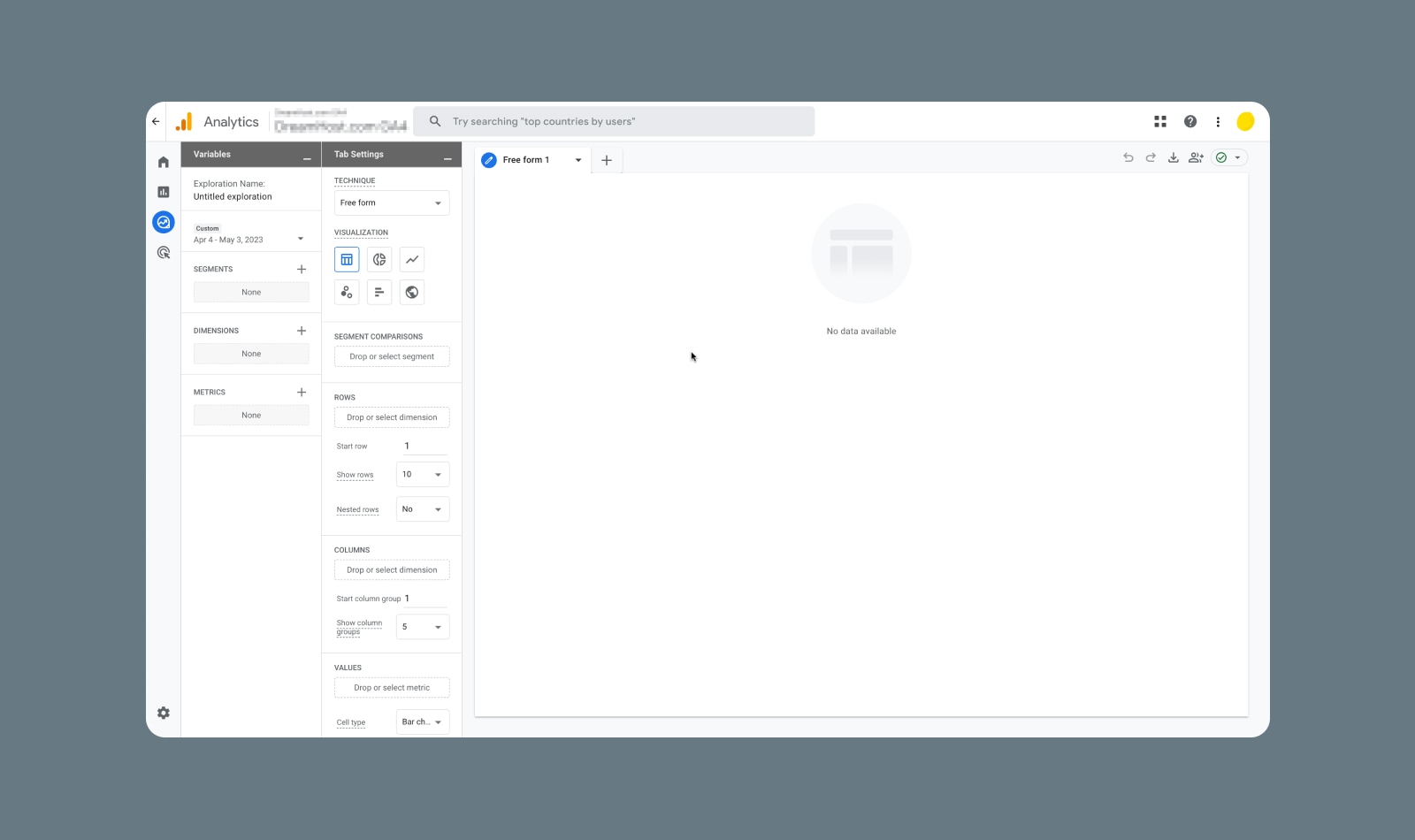
The “technique” for the report will rely on the template you select, affecting the choices available in each tab. But basically,
- Variables is where you customize your segments, dimensions, and metrics. Segments could be user-based, event-based, or session-based. Click the “+” to see all of your segment options. Below that, dimensions will let you further customize the info you should explore.
- When you’ve arrange your variables, you may drag them into the vital section of Tab Settings to use them to your output. You too can use Tab Settings to regulate what’s displayed in your output and the way it’s laid out.
- Finally, the Output tab shows your Exploration in motion. As you customize settings in the primary two tabs, the outcomes shown within the third tab change in real-time, so you may make your reports exactly how you wish them.
If this all seems complicated, don’t worry — the template you select will include default Variables and Tab Settings. In fact, you may customize your outputs more as you experiment with the templates, but using them with their default settings also provide you with a ton of powerful insights.
