
Blog
the study of how knowledge is created

Jun
Epistemology will be defined because the scientific study of information. Typically terms, it deals with the conditions under which knowledge is produced. Nonetheless, its real raison d’être points to the necessity to validate knowledge – that’s, to separate that which is taken into account true from that which is just not.
Epistemology is taken into account one in every of the oldest branches of philosophy. Actually, the primary reflections on this subject were present in ancient Greece, with such well-known thinkers as Plato and Aristotle. In the next article, you’ll learn a bit more about epistemology: what it’s, its branches, functions, and applications.
What’s epistemology?
The traditional Greeks distinguished three forms or levels of information:
- Doxa: This term was first utilized by Parmenides after which by Plato. This is expounded to opinion and belief.
- Episteme: That is the concept that was closest to what we call “science” today. For Plato, episteme was the knowledge that ought to be considered true, while Aristotle believed that it was the means to apprehend reality.
- Gnosis: This has to do with personal experience and perceptions. It’s more related to the spiritual or mystical.
In line with its etymology, the concept that concerns us results from the union of the voice episteme (knowledge) with logos (study). Thus, epistemology will be defined because the study of information.
In fact, throughout history, different authors have proposed their very own definitions. For the renowned philosopher Mario Bunge, epistemology deals with the means of scientific research and its product: scientific knowledge.
Moreover, Guillermo Briones points out that this discipline seeks to grasp the item of study of science, analyzing its philosophical assumptions, in addition to the implicit values, the structuring of its theories, and the methods used to gather and interpret data, to verify or refute assertions.
In brief, this branch of philosophy is accountable for examining different points involved within the production of information. These include the foundations on which it rests, its origin, nature, limits and even validity and quality, critically analyzing the method that leads to really scientific knowledge and the formulation of laws.
Like this text? We expect you could also wish to read: Kintsugi: The Philosophy of Mending the Wounds of the Soul
Questions on knowledge
In his book Theory of Knowledge, Johannes Hessen examines a series of questions which have at all times been raised in epistemology. These questions will be considered a place to begin for anyone wishing to enterprise into reflection.
In a way, how these questions are answered determines the approach or stance that’s taken with respect to knowledge and its modes of production. Let’s take a have a look at what they’re.
What’s knowledge?
This query will be answered in various ways. From a phenomenological viewpoint, knowledge is taken into account to be an act or phenomenon, where a subject (cognoscente) is in front of an object.
Nonetheless, from the angle of psychology, it’s considered to be a process. Which means it takes into consideration the mental processes that happen in the course of the act through which the topic apprehends the characteristics of that which is understood or to be known.
Is knowledge possible?
In line with the aforementioned writer, it’s possible to reply in a skeptical way, stating that it isn’t possible to actually know anything or anyone, that knowledge is barely appearance or a vain illusion. Nonetheless, there are those that are confident that there’s the potential of constructing certainty around the item, which could be the position of dogmatism.
At an intermediate point of those two views is the position often called relativism. On this position, one can know not all the pieces.
Where does knowledge come from?
Aristotle held that there’s nothing within the mind that has not existed before in experience – that’s, that has not been experienced by the topic. Nonetheless, mirages and hallucinations show that the senses can mislead us.
Subsequently, in the alternative view, it’s affirmed that reason is not going to deceive us. That is how the angle of rationalism states that true knowledge is born of reason or makes use of it, although empiricism affirms the contrary.
Does knowledge occur in the topic or the item?
From one viewpoint, knowledge starts from the item or reality and the topic apprehends the properties of this to construct a picture of it. But the alternative position affirms that it’s from the topic, with its ideas and consciousness, where all the pieces arises.
What’s truth?
This can be a key query and probably the most difficult to reply in epistemology. To say what truth is, or to use a criterion to affirm that knowledge is true, is difficult.
There are those that flatly deny such a possibility. Others admit that it is feasible to succeed in valid knowledge, so long as an objective procedure is applied, resembling the scientific method.
We expect you could also wish to read this text: The Philosophy of Nature and its Importance for the Modern World
Branches, currents, schools, and trends
There are different subdivisions, currents, trends, and schools inside the field of epistemology, depending on the approach assumed or the discipline. In relation to the latter, we have now the epistemology of sociology, psychology, biology, chemistry, etc., referring to the research process in these sciences.
Alternatively, we also speak of legal epistemology (regarding the methods and procedures utilized by jurists), normative epistemology, modal, evolutionary, and even genetic epistemology. The latter, established by the renowned pedagogue Jean Piaget, states that knowledge is the product of the interaction of the person together with his or her environment.
There are also other approaches and schools, resembling postcolonial and feminist epistemology. Probably the most influential within the twentieth century is the logical neopositivism of the so-called Vienna Circle.
The important epistemologists
It may be said that an epistemologist is a philosopher who deals with scientific work. Thus, while men of science study reality, he observes and analyzes how theories are constructed, the reasoning and methods used, in addition to the paradigms that in each era determine the ways of knowing.
Throughout history, many names stand out in epistemology:
- In ancient Greece, Parmenides was the precursor, although Plato and Aristotle, each from his own position, laid the foundations of this discipline.
- Within the Middle Ages, certain scholastic philosophers stand out, resembling Saint Augustine and Saint Anselm, in addition to the Andalusian Muslim scholar Averroes.
- With the birth of contemporary science, great names also arise across the reflection on knowledge: at the moment the English empiricists stand out: Locke, Hume, and Berkeley.
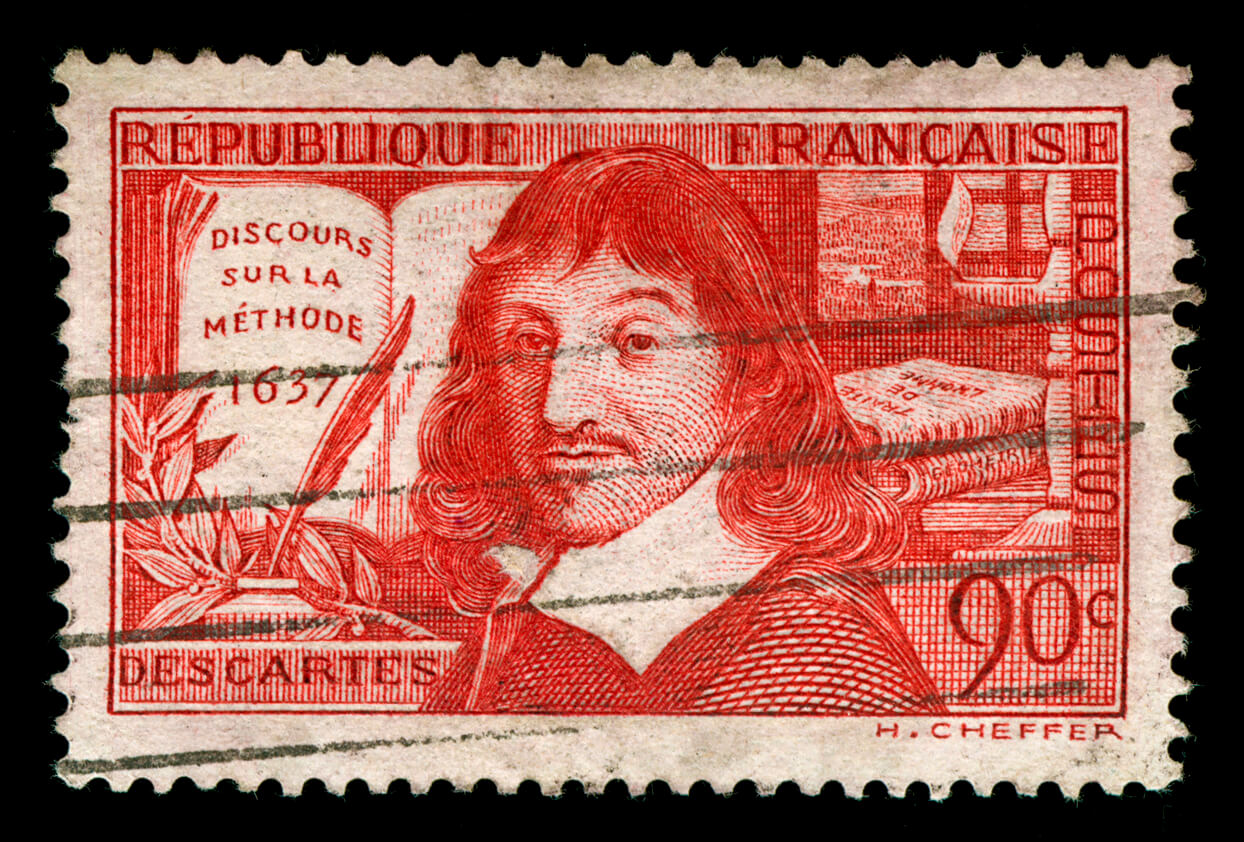
- We will’t fail to say two illustrious thinkers, each in his own area, resembling Descartes and Kant.
- Within the twentieth century, the epistemological schools are represented by Bertrand Russell and Ludwig Wittgenstein.
- More recently, the figures of Karl Popper, critic of logical neopositivism, and the French hermeneuticists Hans-Gadamer and Paul Ricoeur stand out.
The usefulness of epistemology
We’ve already explained what epistemology deals with, with respect to science or knowledge basically. Nonetheless, if there have been any doubts as to its value or scope, it could be emphasized that this discipline is beneficial for the next:
- To explore relationships between different fields of information.
- To assist to grasp and even resolve conflicts of interest.
- To investigate and evaluate the relevance of applied methods.
- To discern what knowledge ought to be considered scientific.
- To deepen different valid ways of manufacturing knowledge.
- To advertise debate on what will be accepted as ethical in science.
- To find out the standards to validate the soundness and scope of the findings obtained.
- To contribute to the upkeep of a critical approach to the bounds of information.
- To keep up adequate vigilance on the ideologies that influence the work of science.
The validity of epistemology today
Epistemology is just not only useful to those that observe from the skin, but in addition to those that do science. The scientist is a human being and as such, is just not exempt from incurring in situations that might go against the postulates.
Currently, with the production of information by artificial intelligence systems, an entire panorama of possible interpretations and reflections from epistemology has opened up. There are a lot of challenges to be faced on this regard. Although there’s still an extended strategy to go, epistemology will at all times have something to contribute.
It’d interest you…
