
Blog
Top 20 Website Metrics to Track

Jul
Success is a journey, not a destination, and on this expedition, understanding metrics is your most reliable compass. It’s the key language that translates user behavior into actionable insights. On this blog post, we delve into the world of web analytics, sessions, and bounce rates, to uncover the hidden story behind the numbers.
The bottom line is finding the right KPIs to your site– success can are available in many alternative forms, and it’s essential know in case your site is sailing or sinking.
We’ve written this guide to provide you the tools and knowledge it’s essential make it easy. We’ll enable you understand why this data is helpful and the best way to start collecting it for your individual website.
Let’s dive into the 20 key metrics you must track to measure your site’s success.
Traffic Metrics
Traffic is like oxygen to your website.
If people aren’t visiting your site, they will’t engage along with your content, join to your email list, or purchase your products.
The 1st step for measuring any website is to grasp how much traffic is coming after which understand what that traffic is doing once they arrive.
1. Sessions or Users
The highest-line metric for understanding your website’s traffic is sessions.
Sessions seek advice from the variety of unique visits to your website.
In other words, it’s the variety of times someone (anyone) visited your website in a given period. Consider it just like the number of people that walk through the door of a restaurant.
Sessions are closely related to users and pageviews. Users are the variety of uniquely identifiable individuals who come to your website; Pageviews are the variety of pages viewed across all sessions by every user. A single user can visit your site greater than once (multiple sessions) and take a look at multiple page (multiple pageviews).
These metrics can often be tracked through your hosting provider. For instance, DreamHost’s managed WordPress hosting includes access to this information in your user dashboard.
Nonetheless, you almost certainly need to track your traffic with an analytics tool like Google Analytics or a custom-built analytics report in Looker Studio (formerly Google Data Studio).
There isn’t a one correct number in relation to sessions. It’ll differ radically depending in your goals, audience, and area of interest.
Nonetheless, in a general sense, you need to be searching for a gradual increase in sessions over time, which implies your website is growing in visibility and recognition. For those who’re not getting the numbers you expect, chances are you’ll need to look into a few of your other traffic metrics to totally understand where the issue lies.
Nerd note: For those who really need to go down the rabbit hole here, you possibly can segment your traffic even further. Beyond just taking a look at sessions, users, and pageviews, you can too take a look at segments like recent users vs. returning users.
Anytime we’re measuring website performance, it’s essential to trace a single, consistent metric over time fairly than jumping between two different data points.
2. Top Pages (By Traffic)
Now, which pages are your website visitors actually viewing?
One other key metric is taking a look at the highest pages in your website, ranked by the quantity of traffic (sessions or pageviews) they receive.
Tracking your top pages can inform you what form of content hits home along with your readers and the way they find it, which may enable you determine where to direct resources or which parts of your website to give attention to in the long run.
For instance, taking a look at the highest pages in your website, you would possibly notice that your audience responds more favorably to video than text-based content.
In that case, you would possibly shift resources to create more videos to grow your site.
One other way you should utilize Top Pages data is by guiding visitors to content that others have found helpful. For those who’re willing to experiment with adding some WordPress plugins to your site, you possibly can even display a “popular posts” section to spotlight content based on traffic counts.
Marketing Metrics
Now that we all know a bit about how many individuals visit your site and which pages they visit, we must always attempt to work backward.
What did we do to bring them here?
That is the central query in all of promoting. It’s about understanding what activities you or your marketing team are doing to drive traffic so you possibly can do more of it in the long run.
These website metrics will enable you answer that query.
3. Traffic By Channel
In relation to marketing and analytics, a “channel” is any path visitors take to achieve your website and other content. For instance, some users may arrive at a site through your social media profiles (one channel), while others may get there via paid search (a second channel).
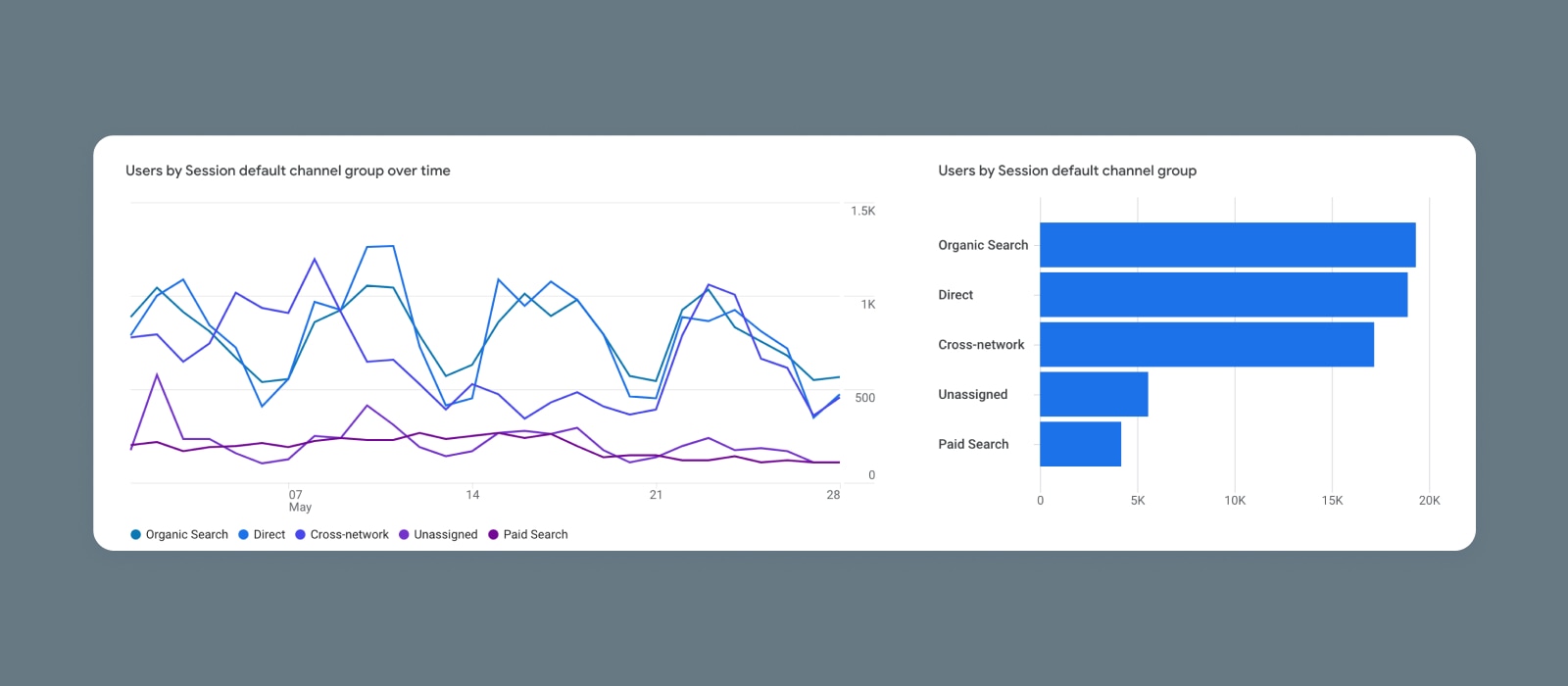
In Google Analytics, you possibly can take your session data and filter it by channel.
Google provides an inventory of channel definitions as they pertain to tagging in its analytics system. That is so you possibly can appropriately organize different funnels and keep tabs on which channels drive probably the most traffic.
You may want to have a look at all of the traffic that involves your site via social media links, for instance. You may compare that result to traffic coming from email marketing campaigns. This could tell you which of them of your digital marketing strategies are most successful and which could need more work to enhance their Return on Investment (ROI).
4. Organic Search Traffic
Organic search traffic includes visitors who arrive at your website from search engines like google and yahoo like Google (or one in all the numerous Google alternatives) fairly than through other channels resembling social media, paid promoting, or referrals.
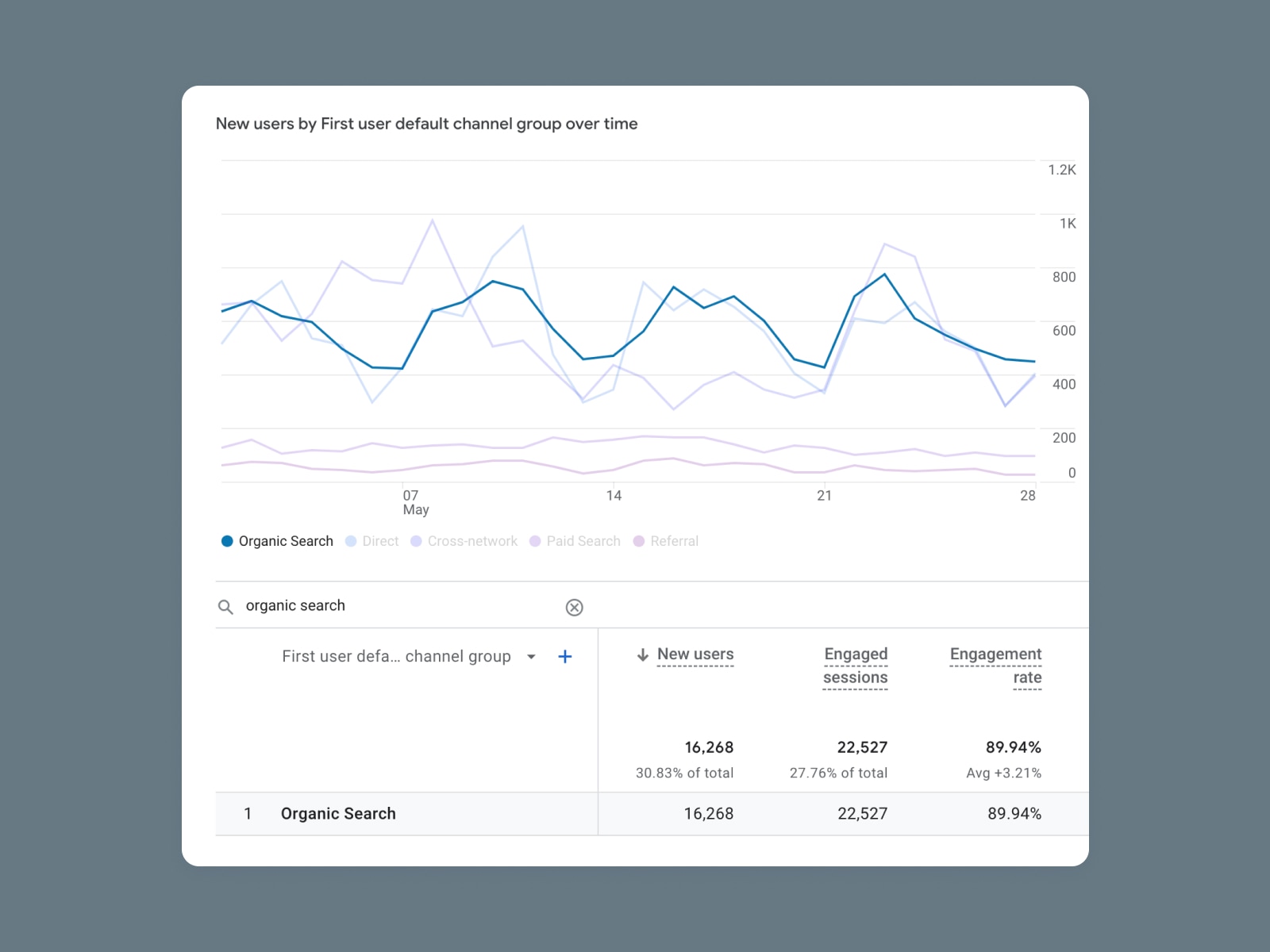
Organic search is critical because users who find your site this manner are typically searching with a particular goal in mind. In actual fact, 51 percent of all web traffic comes from organic search, and over 40 percent of revenue is generated from search engines like google and yahoo.
Increasing organic traffic means improving your website’s web optimization to rank higher in search results.
5. Email Open Rates
If your small business is anything like most businesses, you almost certainly generate loads of traffic through email marketing. Getting your email opened is step one in driving a visitor to your website, and understanding your email open rate gives you a way of the standard of your email list and your emails.
An email’s “open rate” represents what number of recipients actually opened it of their inboxes. Mailchimp’s benchmarking data puts the common open rate between 15 percent and just over 28 percent, depending in your industry.
While there are numerous ways to encourage people to open your emails, your best choice could also be to try various strategies and keep watch over the numbers to see which of them end in probably the most engagement. Just do not forget that tracking open rates does require email-specific tracking tools.
Get Content Delivered Straight to Your Inbox
Subscribe to our blog and receive great content similar to this delivered straight to your inbox.
6. Email Click-Through Rates
Next up are your Click-Through Rates (CTRs). This represents how many individuals not only opened a given email but in addition clicked on one in all the links it contained. This could include links back to your blog and social media platforms, in addition to all types of direct CTAs.
This metric can have a big effect in your overall website performance because the higher CTR implies that you’re generating more traffic to your site (and your customers are likely more engaged!)
The typical benchmark for CTRs is 2.6 percent across all industries.
Nonetheless, the particular metric you’re aiming for will rely on your audience, area of interest, and goals. A poor CTR on a given link may mean it’s essential spend a while developing stronger CTAs that appeal to your audience’s interests and wishes.
7. Clicks From Social Platforms
One other essential marketing metric to have a look at is your success with social media.
Traffic from Twitter, Facebook, Pinterest, Tik Tok, and whatever other recent platform has popped up this week will likely be a superb indicator that your content and your brand is resonating along with your audience on those channels.
For those who’re running a marketing campaign heavily on social media, you’ll likely want this metric to indicate loads of clicks out of your social content. Weak or static numbers will be addressed through smarter social media promotion strategies.
Engagement Metrics
Engagement can take many forms online.
In a general sense, it’s any way visitors interact along with your site (besides simply reading its content). Engagement metrics are helpful for understanding in case your content resonates along with your audience, which content is most engaging, and the user experience in your website.
It’s also a number one indicator of how likely the traffic in your website is to make a purchase order or complete a conversion.
8. Average Time On Page
The period of time a visitor spends on the pages they visit (sometimes called “dwell time”) is usually a complicated metric to trace. With that being said, Google Analytics does provide a solid breakdown of the averages for every page in your site.
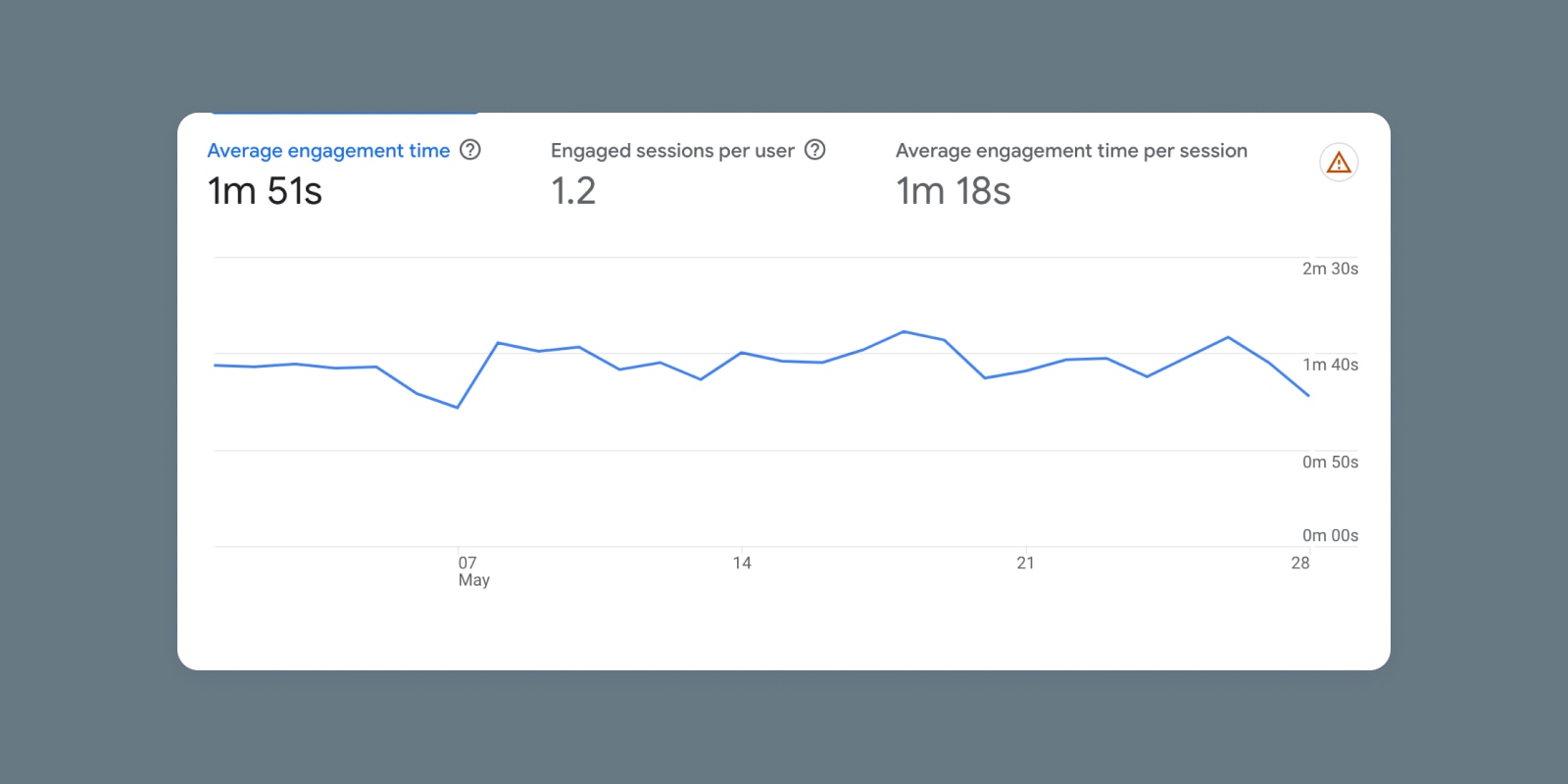
It’s calculated by averaging the period of time that somebody is on each page before clicking on one other page in your website.
In GA4, they’ve updated the metric to measure how long someone stays engaged in your website. This metric now moreover captures visitors who click or scroll in your page but never click onto one other page.
You can too track the common session duration, which looks on the cumulative period of time someone spends in your site.
Higher average time on page or average session duration likely implies that users are more engaged along with your site, but keep an eye fixed out for any anomalies. For instance, a high average session duration and a really low average time per page might indicate that users are confused and clicking forwards and backwards.
9. Bounce Rate
Your site’s “bounce rate” is a measurement of what number of viewers got here to your site after which left without clicking to a different page.
Bounce rate is usually a rather more effective measure of reader interest than traffic stats. While it’s great to see your website getting more visitors or sessions, it’s not great if most of that recent traffic only visits one page before leaving.
A high bounce rate may indicate that your content isn’t resonating along with your audience.
Alternatively, it may be a sign that your traffic sources aren’t superb. For those who’re blogging about fitness and your traffic is coming from sites about bank card debt, for instance, you will have a high bounce rate and need to deal with this.
A bounce rate within the range of 25 percent to 40 percent is taken into account excellent. Anything above 70 percent indicates that your audience-building approach requires some thought.
You can too take a look at the precise pages where visitors leave your website (the “Exit Rate” by page) to uncover any issues with specific content.
10. Pages Per Visit or Pages Per Session
Once you measure “pages per visit” in your website, you’ll typically start with a mean of the variety of pages viewed over a given variety of days divided by the variety of unique visitors to your site during that very same timeframe. This provides you an idea of how users are interacting with your small business.
Depending on how your website is about up, you would possibly naturally have a low pages per visit metric. As an illustration, in case your website mostly consists of specific landing pages with a single clear call to motion, then readers may not navigate around before clicking a button or submitting a form.
On a flip side, a low pages per session metric could indicate that your content or your user experience needs work. If you’ve gotten content with loads of external links but not many internal links, you may be losing visitors who click to a different site fairly than staying on yours.
11. Returning Visitors
Once you take a look at your “returning visitor” numbers versus your “recent visitor” numbers, there are some assumptions you possibly can make about your site’s overall traffic. You’ll give you the option to see whether your readership is growing, staying regular mainly because of loyal regulars, or declining.
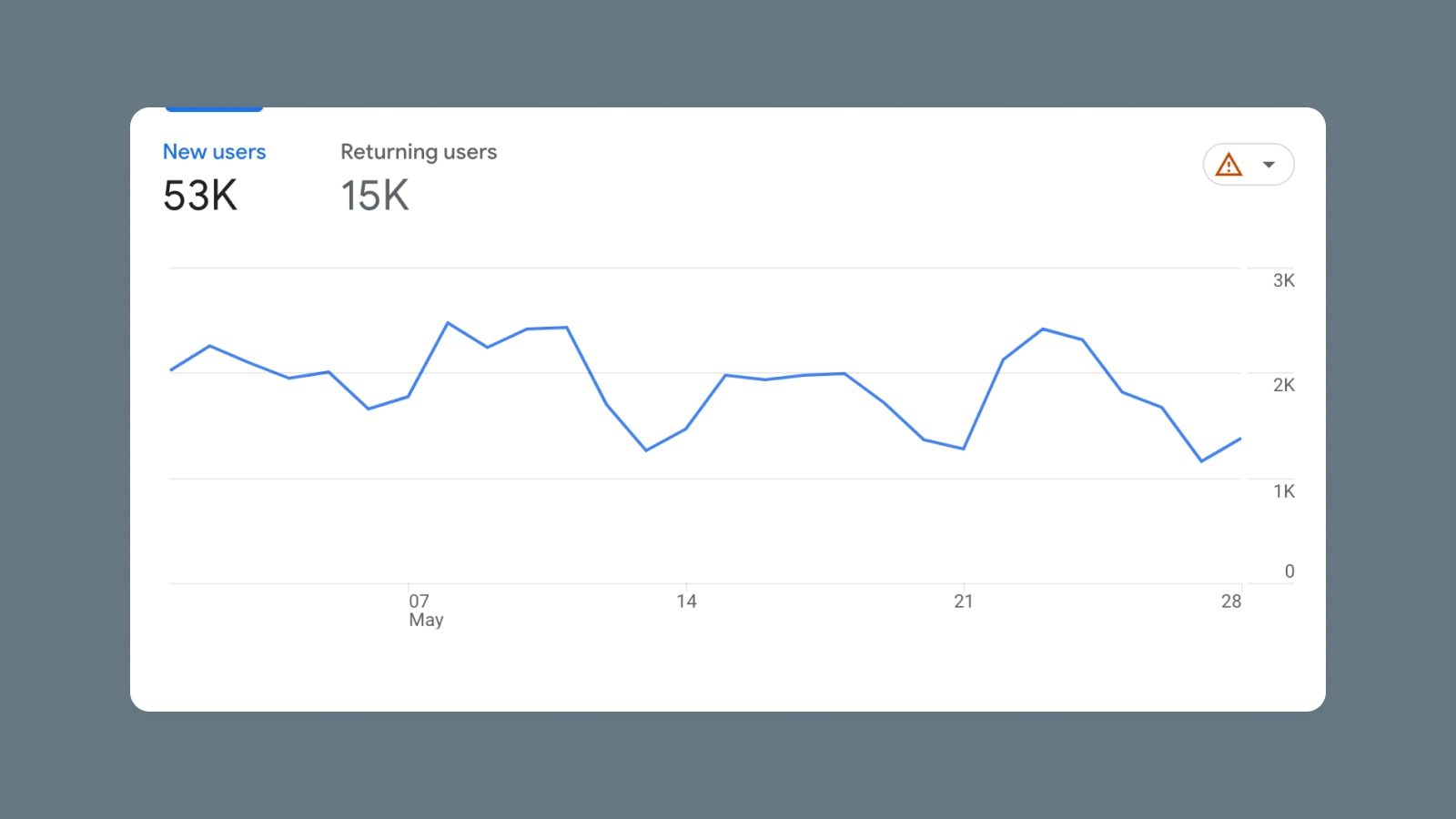
In GA4, you possibly can quickly see the ratio of latest and returning visitors to your website by clicking Reports > Retention.
This can also be sometimes represented as a percentage or a ratio. As an illustration, in case your total number of tourists is 20 and 5 of them are returning visitors, you then’d have a 25 percent return visitor rate or a 0.25 ratio.
For those who aren’t seeing loads of return visitors, chances are you’ll be attracting readers but struggling to essentially catch their attention.
Nerd note: You may see Google Analytics data directly out of your WordPress admin panel by installing the MonsterInsights plugin. That is the most well-liked WordPress plugin for Google Analytics. It allows you to display your data right in your dashboard, so that you don’t need to go to a different page to view it.
12. Social Shares Per Blog Post
If people love your content, they may share it. (Or they may not.)
One helpful technique to see in case your audience finds your content helpful is to trace how over and over your pages and posts get shared.
It’s possible you’ll need to use tools like HootSuite or GetSocial.io along with your standard website analytics. These tools can enable you see if, when, and where your content is being shared on social media. You then can track this metric over time to grasp in case your readers are resonating along with your content after which sharing it with their network.,
Conversion Metrics
Conversions are sometimes used to trace sales on an ecommerce website, but a “conversion” will be any motion you’d wish to encourage in your site or blog.
For instance, you would possibly measure lead generation, sign-ups to an email list, or downloads of a free ebook. Regardless of what it represents, understanding your conversion rate helps you create a Conversion Rate Optimization (CRO) technique to increase conversion rates.
13. Conversions
Step #1: Determine what a “conversion” means in your website.
Step# 2: Track how over and over people take that motion.
Whether a conversion is someone making a purchase order, clicking a call-to-action (CTA) button, filling out a lead form, downloading a template, or simply visiting your homepage, you wish to know the way often this happens in your website.
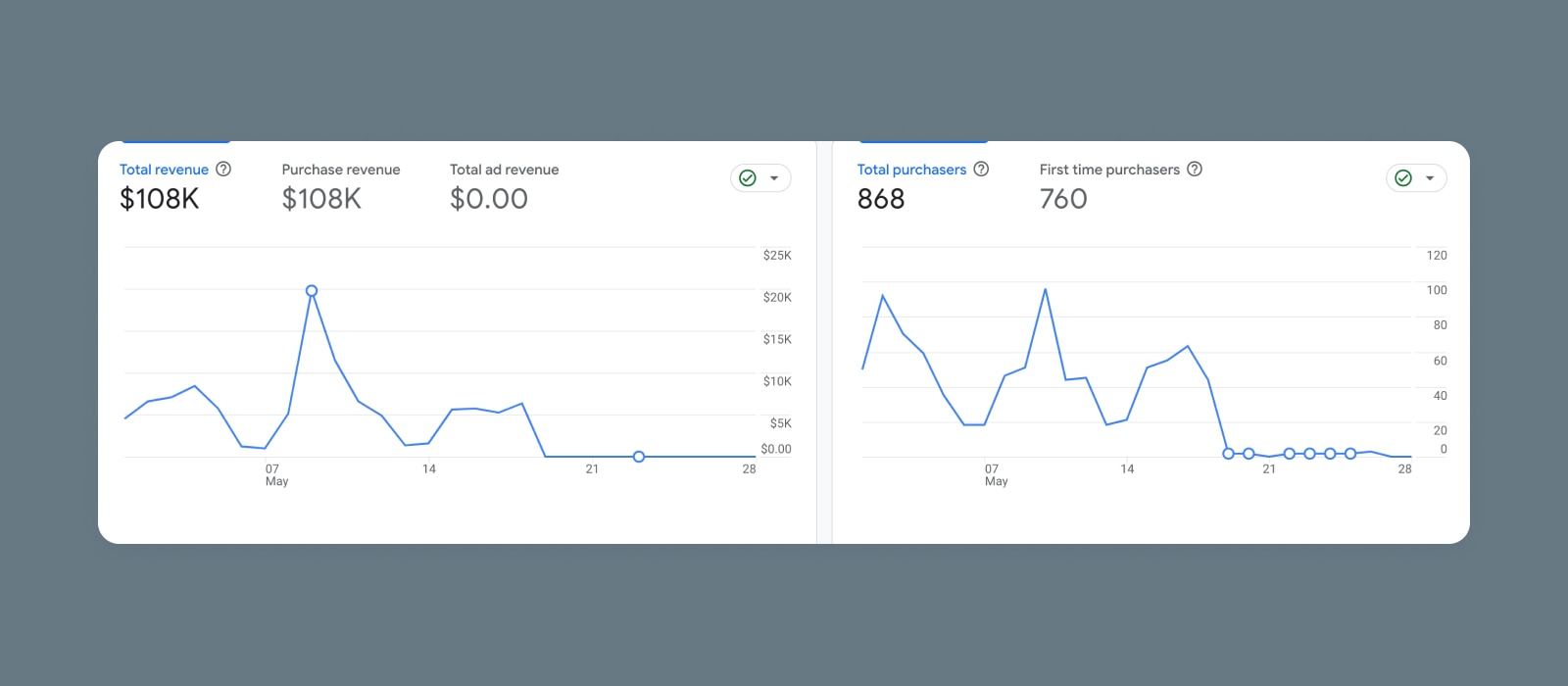
Note the whole variety of conversions and take a look at to make that number go up each week.
14. Conversion Rate
Knowing how many individuals accomplished a conversion is useful.
But knowing what percentage of individuals, on average, will complete that motion can enable you higher plan, forecast, and budget for the long run. As an illustration, when you know that 10% of your site visitors will convert, you then could make smarter decisions about investing in marketing and promoting to drive more traffic (and much more conversions!)
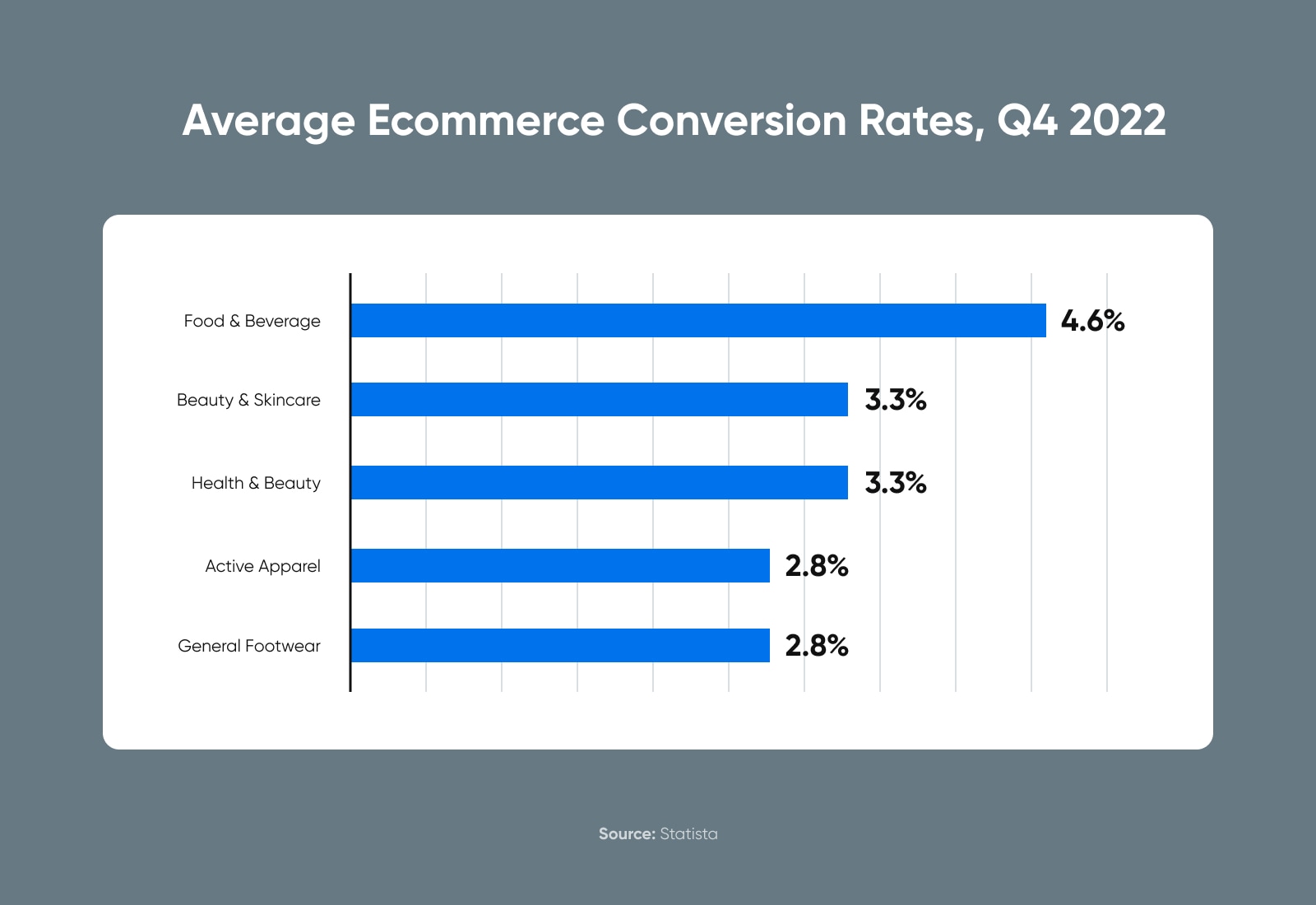
What constitutes a “good” conversion rate will rely on your small business and what conversion you might be tracking specifically. But, there are some great benchmarks on the net to enable you understand in case your overall conversion rate appears to be in a superb place or could use some improvement.
15. Top Conversion Sources or Channels
Next, consider tracking your conversions by source or channel.
The goal is to search out out which traffic sources (and marketing activities) are generating probably the most conversions. In case your social media posts attract loads of visitors, but almost none of those visitors convert, it’s time to contemplate whether you’re specializing in the fallacious audience or failing to reply their particular pain points.
On the flip side, chances are you’ll find that a channel like email drives most of your conversions and judge you should utilize email marketing more effectively to extend leads or sales.
web optimization Metrics
Search Engine Optimization (web optimization) is a group of techniques utilized in website design and content creation to extend your website’s reach through search engines like google and yahoo. web optimization includes what’s called each on-page web optimization and off-page web optimization.
When done right, your search engine rankings should improve and you’ll increase your site’s traffic. That’s why it’s essential to know if your web optimization strategy is making a difference.
These metrics aim to grasp your website’s health and visibility on search engines like google and yahoo.
16. Keyword Rating
Keyword rankings indicate where your website appears in search engine results for specific words and phrases. For instance, if you’ve gotten a construction company, you wish to show up near the highest of the page for terms like “home builders near me” or “house construction firms in Los Angeles”.
The upper your site ranks for relevant keywords, the more visibility it’ll need to your audience. For those who haven’t already, you’ll need to do some keyword research to find out which terms and phrases your audience is trying to find.
Then start tracking the way you rank for those keywords.
There are several web optimization tools you should utilize. Google Search Console may even show you details about how your website appears in search results.
For those who’re searching for a more robust tool, we recommend trying out either Semrush or Ahrefs.
Each of those tools are utilized by web optimization and marketing professionals in all types of industries. They provide day-to-day position tracking to your top keywords and a set of other tools to enable you level up your marketing and grow your site’s traffic.
17. Backlinks
Backlinks are links to your website from one other site or vice versa. Many backlinks operate like citations, noting where the data got here from and referring readers to the unique source. Search engines like google tend to provide preference to sites with a number of backlinks, especially in the event that they’re coming from high-quality sources.
Constructing backlinks will be tricky because you don’t have direct control over who links to your site. Whether you’re actively attempting to generate backlinks or not, tracking the variety of backlinks pointing to your website is one of the crucial essential metrics for measuring web optimization success.
Using a tool like Linkody, you possibly can track and see links pointing to your website.
Or, again, you should utilize Google Search Console to trace this metric.
18. Average Inbound Links Per Blog Post
While we’re talking about backlinks, consider measuring what number of links each of your pages or blog posts attracts.
the common, you possibly can get a way of whether your web optimization and content marketing efforts are contributing to your website’s overall domain rating by generating links.
19. Top Exit Pages for Organic Traffic
One other common analytic you possibly can track is the last page each user was on before leaving your website. This known as the “exit page.” Having this information at hand will be just as essential as monitoring your overall organic traffic.
It is because the more you understand why users select to go away your website, the better it’s to persuade them to stay around longer. If the highest exit pages share certain elements, resembling a specific type or variety of content, this is usually a clue that your audience is searching for something different.
Use Google Analytics to trace your site’s top exit pages. You may easily access an Exit Page report and see a breakdown of all of the related data.
Website Speed Metrics
Finally, let’s discuss your website’s speed – how briskly it loads when people attempt to visit.
One of the crucial essential things to learn about web users is…they’re impatient as heck. They won’t wait an additional 2 seconds to your site to complete loading. As an alternative, in case your site is slow, they’ll just hit “back” and find something else to have a look at.
So, yeah, your website’s speed is vital.
Luckily, there’s one big metric you possibly can track to grasp your site’s loading and performance.
20. Page Speed (Core Web Vitals Rating)
Google’s Core Web Vitals is definitely an array of metrics about your website’s performance and cargo speed.
The important thing takeaway: Pass Core Web Vitals, and also you’re doing pretty dang good.
All you’ve gotten to do is run the Google PageSpeed Insights evaluation to get the metrics you wish about load times, page responsiveness, and more.

Fortunately, in case your scores aren’t great, you possibly can easily optimize your website for speed.
Managing Your Site’s Metrics So You Can Construct Your Business
We’ve just stepped through crucial metrics to your website, and it would feel like loads of things to trace.
It takes loads of data to grasp your site’s performance since it is complicated. Every site is exclusive, and every one who visits your site has a rather different experience. The goal is to grasp that have the very best we will after which make it the very best it might be for each single one in all your website visitors.
For those who’re feeling a bit overwhelmed by all of those metrics (or the numbers aren’t looking so hot), then consider bringing in some skilled help. Along with helping you construct web sites, the DreamHost Marketing Services team may also enable you construct your small business and track the proper data to prove it.
